-
Guido CREPAX
COD:Born in Milan in 1933 into an environment where art was part of everyday life, Guido Crepax grew up surrounded by music and aesthetic sensitivity: his father was the principal cellist at La Scala, and the rhythm of sound became for him the rhythm of the page. This inclination toward composition merged with the rigor of his degree in Architecture in 1958, which taught him to design not only spaces but also graphic panels.
Before turning to comics, Crepax refined his elegant style in advertising graphics, creating jazz record covers and campaigns for brands such as Shell and Campari. These experiences prepared him to bring modern aesthetics into his most famous works. In 1965, he introduced Valentina Rosselli on the pages of Linus, initially as a supporting character. Soon, however, Valentina became the absolute protagonist: a “living” woman, with an identity card, a career as a photographer, and a complex psyche. Not an archetype, but a character who ages alongside her creator, moving through Italian society of the 1960s and 1970s with independence and intensity. Creating Valentina meant breaking taboos, exploring female emancipation, and transforming eroticism into intellectual inquiry.
Crepax also revolutionized the language of comics, moving beyond the traditional grid. His storytelling took on cinematic rhythms, fragmenting action into minute details—a reflection in glasses, a gesture, a breath—expanding the perception of time. In this way, Valentina’s everyday life blends into a dreamlike dimension, making the reader a participant in her fragility and visions. Through her, Crepax fused fashion, literature, and psychoanalysis into a total art form, capable of capturing the anxieties of a society in flux.
Crepax remains an architect of desire, able to translate the aesthetics of the twentieth century into an eternal line, leaving behind a style icon that continues to engage with modernity.
-
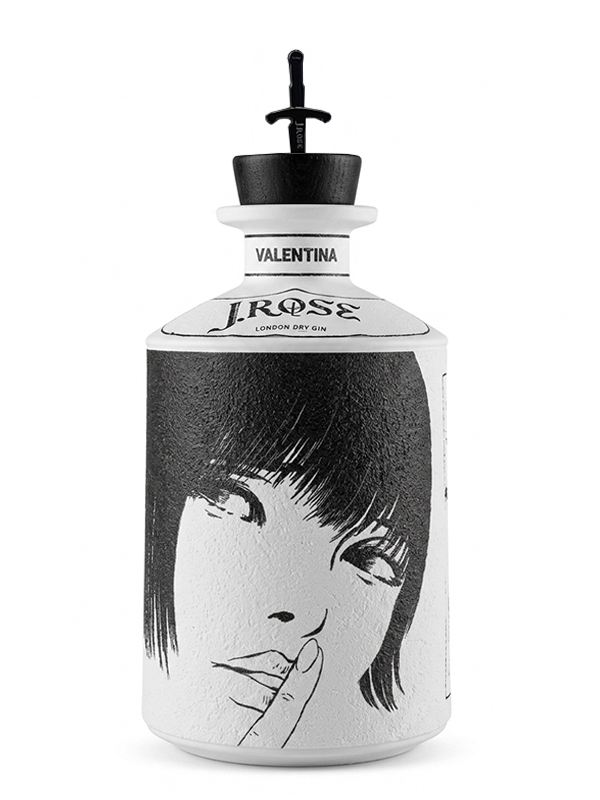
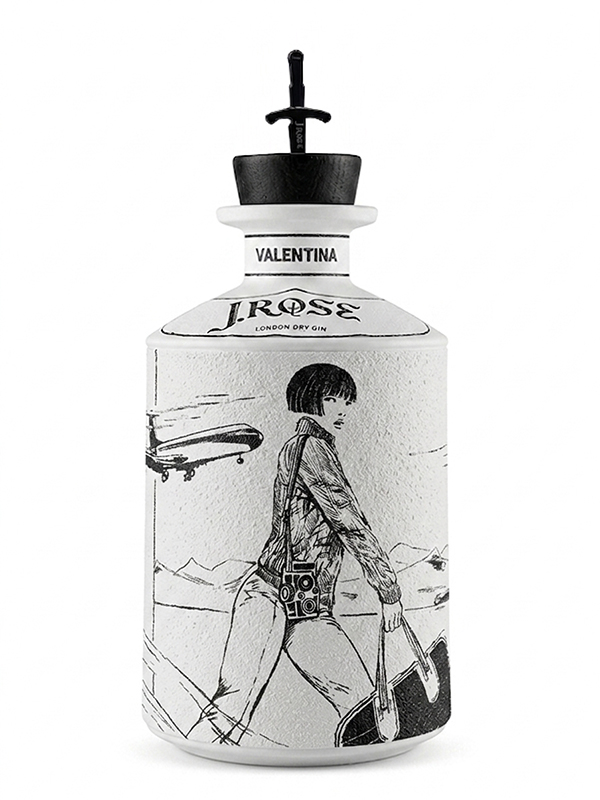
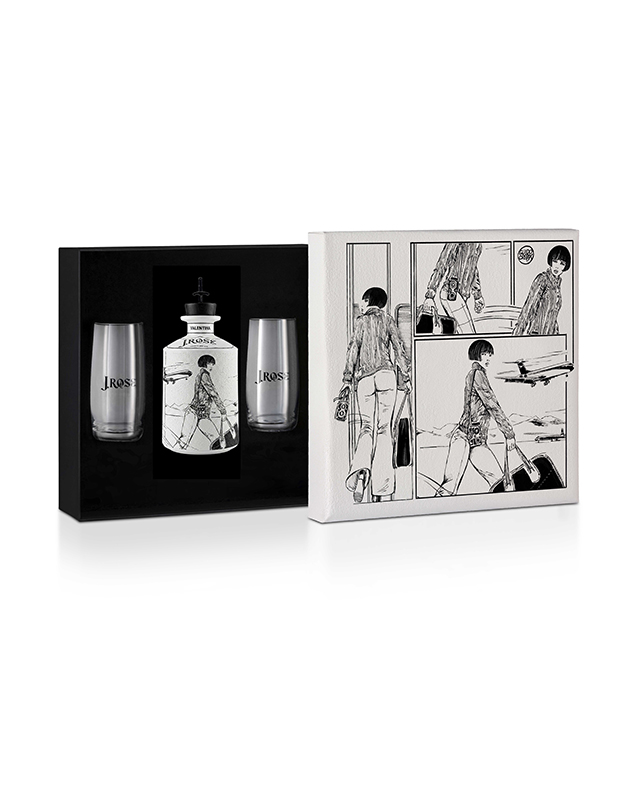
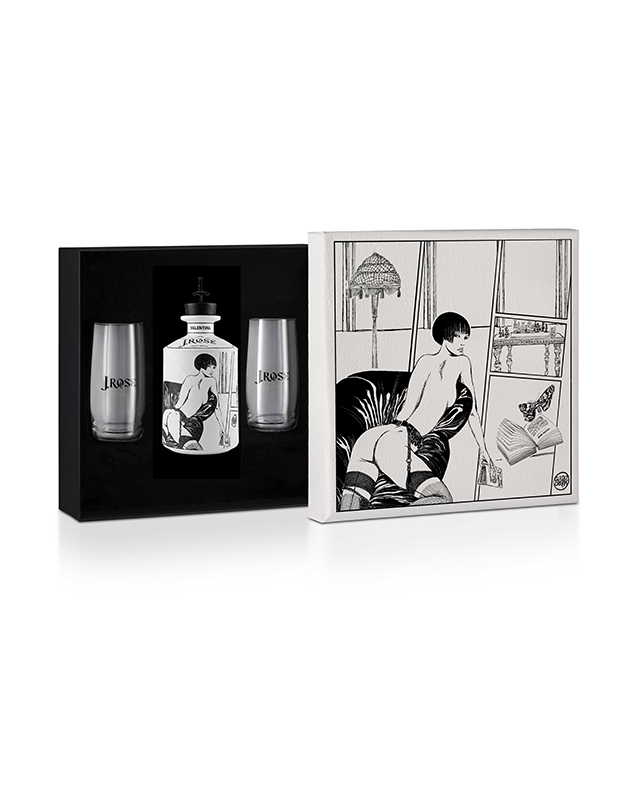
Box J.Rose London Dry Gin 70 cl VALENTINA JRBV03
COD: JRBV03 177,00€1 J.Rose Valentina 03 70 CL
2 Glasses
1 Luxury Box with canvas -
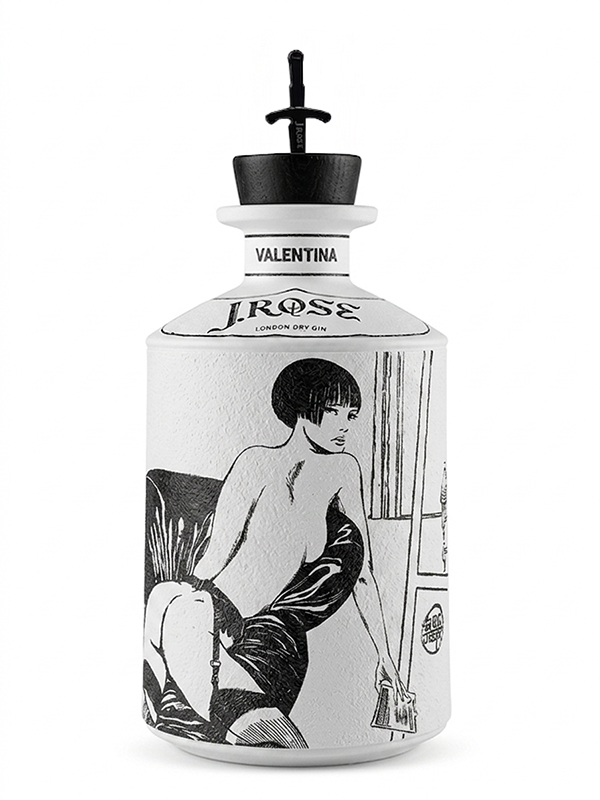
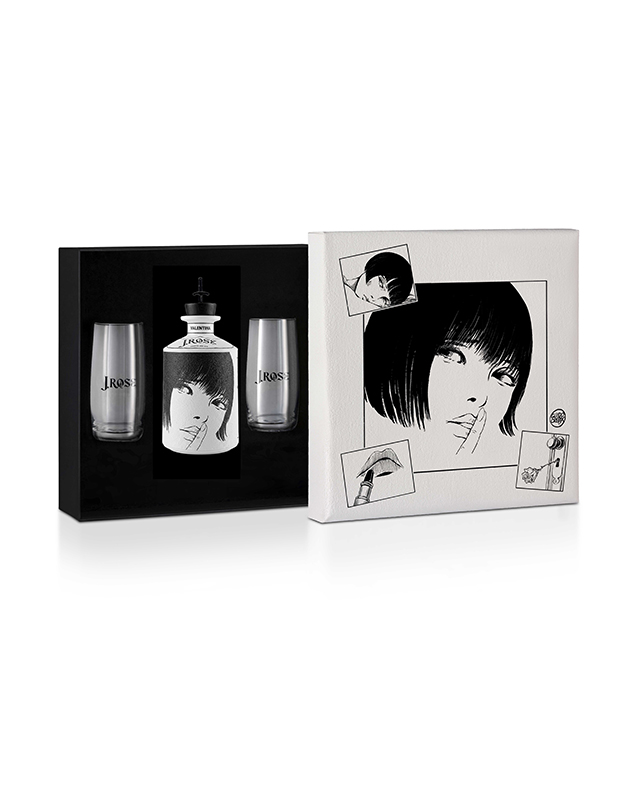
Box J.Rose London Dry Gin 70 cl VALENTINA JRBV02
COD: JRBV02 177,00€1 J.Rose Valentina 02 70 CL
2 Glasses
1 Luxury Box -
Box J.Rose London Dry Gin 70 cl VALENTINA JRBV01
COD: JRBV01 177,00€1 J.Rose Valentina 01 70 CL
2 Glasses
1 Luxury Box