-
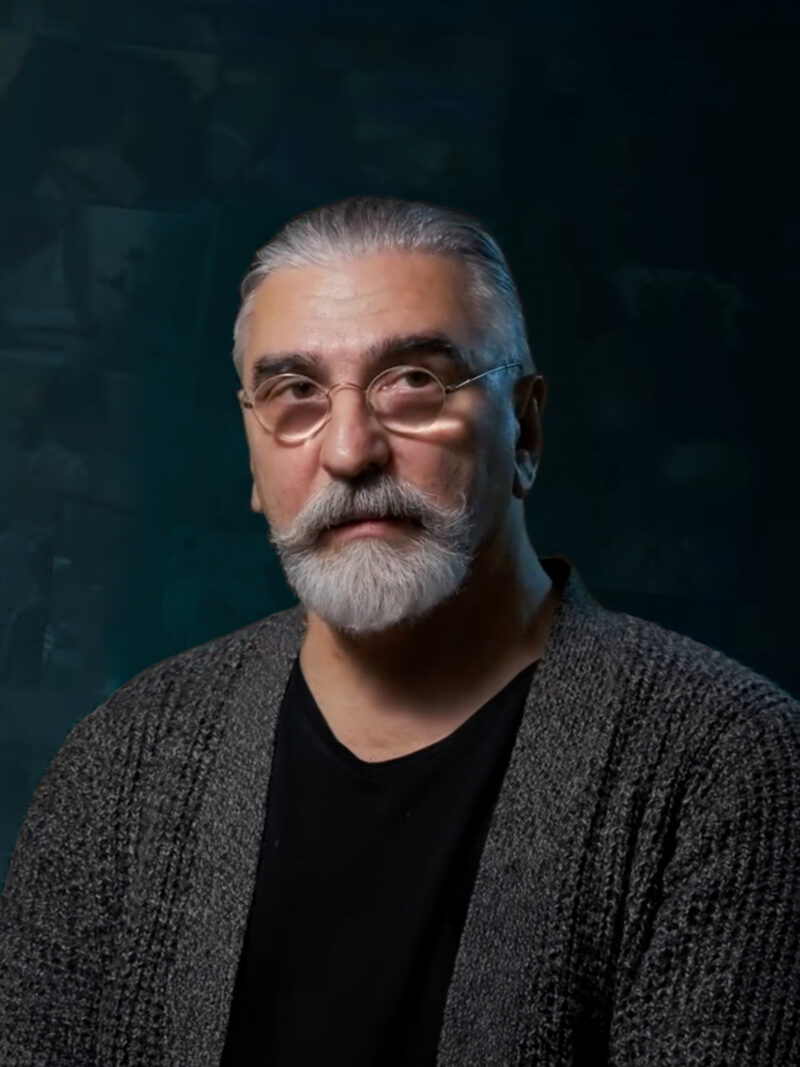
Vladimir VOLEGOV
COD:Born in 1957 in Khabarovsk, in Russia’s Far East, he spent his childhood moving frequently, always supported by the attentive and loving presence of his mother. From a young age, painting was a profound necessity for him—the most natural way to observe, understand, and give form to the world. The care of his mother shaped in him a sensitivity toward the female universe, which would become the heart of his artistic vision.
Women—with their silent strength, tenderness, and wisdom—are an inexhaustible source of inspiration. Through them, he learned that delicacy and sensitivity are profound forms of strength.
During his artistic training, he encountered the great masters of classical painting: Repin and Serov marked his early steps, while Anders Zorn, John Singer Sargent, Giovanni Boldini, and Joaquín Sorolla helped define his language, rooted in the emotional truth of the portrait, the grace of gesture, and light as a carrier of feeling.
He has worked in various fields—from illustration to editorial and digital projects—without ever abandoning painting. Traveling through Europe and creating portraits on the streets of Barcelona, Berlin, and Vienna, he learned to quickly capture the emotional essence of people, refining his way of representing it.
The main themes of his artistic research are women and childhood: capturing intimate moments, he seeks to convey care, tenderness, and love, making emotion visible.
In the early 2000s, his work gained international visibility through collaborations with galleries in Europe and the United States, consolidating a contemporary romantic realism centered on the human figure.
Since 2006, he has lived in Spain, where the light and atmosphere naturally influence his painting. Here his research has become more personal, focused not on formal likeness but on emotional resonance: what remains when time seems to stop.
Today, he continues to work on private commissions and personal projects, faithful to an idea that has always guided him: painting must breathe life, emotion, and humanity. Every work is born as a gesture of admiration and gratitude for the inner beauty of the human being.
-
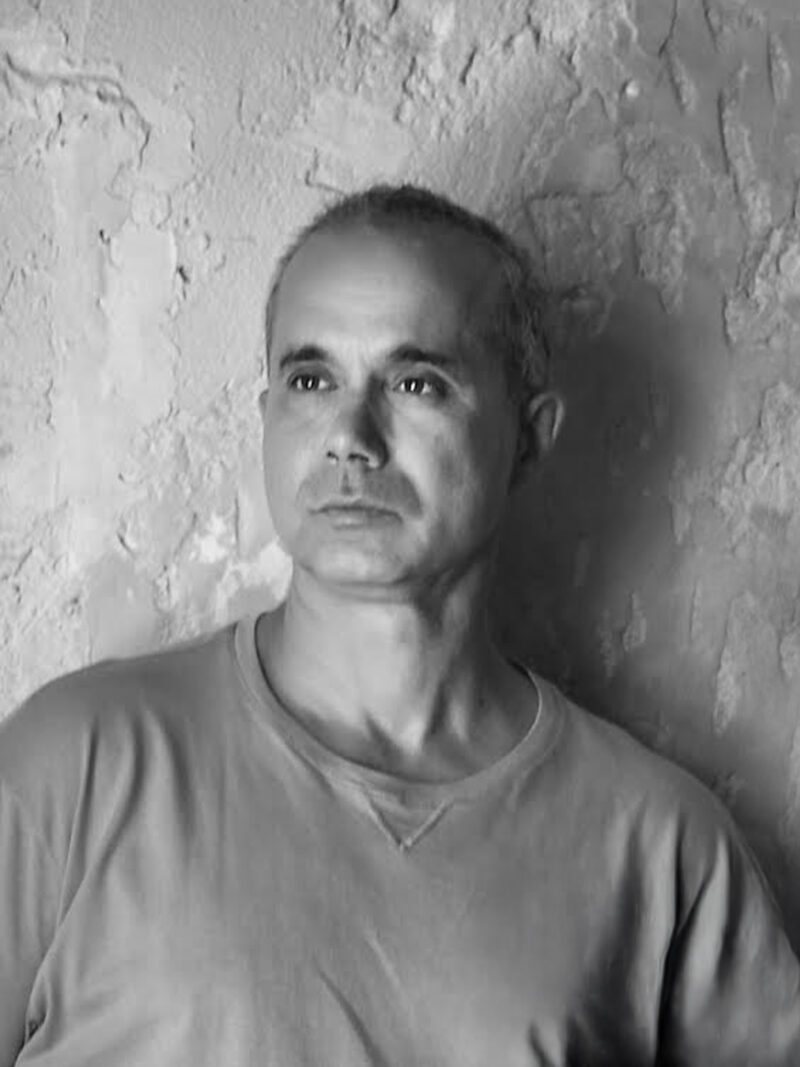
Francesco PALMA
COD:Francesco Palma is an artist who has spent over forty years exploring decorative painting, portraiture and set design with both rigor and sensitivity, blending technical mastery with emotional depth. Palma has developed a visual language that moves between memory and contemporaneity, favoring the authenticity of gesture and the intensity of line. In 1998, together with Dario Roselli, he founded FRADA, an art atelier specializing in hand-painted frescoes for prestigious residences around the world. Today, Francesco Palma leads the hand-painted division at Affreschi & Affreschi, the company that owns the brand J.Rose. For J.Rose’s Follow the Flow collection, Palma transforms the surface of the label into a pictorial narrative in motion, where forms and symbols dance in harmony, evoking the rhythms and gestures of different cultures. Each label becomes a visual choreography, a weave of emotions that restores a narrative and sensory role to the painterly gesture.
-
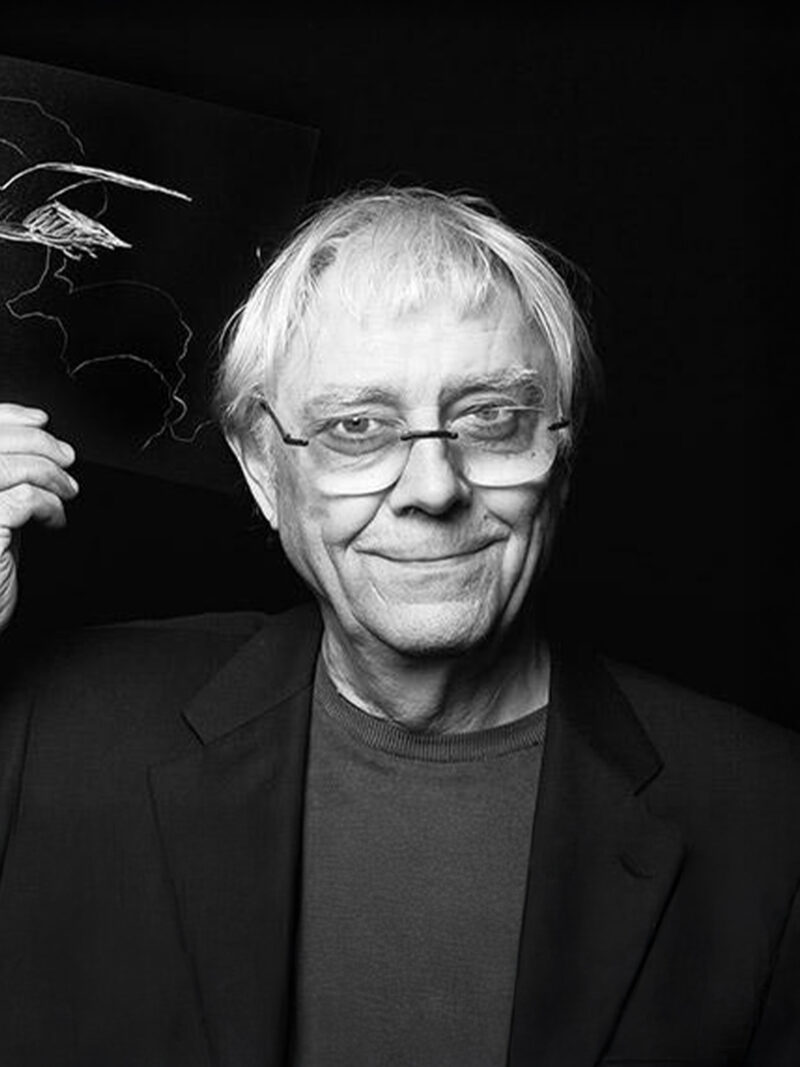
Milo MANARA
COD:Milo Manara was born in Luson, in the province of Bolzano, on September 12, 1945. He debuted at the end of the 1960s as an author of erotic-detective stories. In the 1970s, he collaborated with Corriere dei Ragazzi and many other comic magazines of the period. Based on scripts by Alfredo Castelli and Mario Gomboli, he created Un fascio di bombe. Together with Silverio Pisu, he gave life to Lo Scimmiotto e Alessio, il borghese rivoluzionario, marking his debut in auteur comics. In 1978 came the turning point with Giuseppe Bergman, the first highly successful character conceived, scripted, and drawn by Manara. In the early 1980s, he created Il Gioco, a story that brought him worldwide success. Based on texts by Hugo Pratt, he illustrated Tutto ricominciò con un’estate indiana and El Gaucho. This was the period in which he created the iconic Miele, protagonist of Il profumo dell’invisibile and Candid Camera. Beginning in 1987, he collaborated with Federico Fellini, adapting one of the director’s screenplays into two comic stories: Viaggio a Tulum and Il viaggio di G. Mastorna, also known as Fernet. This was followed by comic adaptations of three literary classics: Gulliveriana, Kamasutra and L’asino d’oro. He then illustrated three socially themed stories: Ballata in Si bemolle, Rivoluzione and Tre ragazze nella rete. In 2009, Marvel Comics commissioned him, together with Chris Claremont, a female-led X-Men story, X-Men: Ragazze in fuga. He also collaborated with Neil Gaiman for DC Comics. Since 2000, Manara has worked on the project Il pittore e la modella. Based on texts by Alejandro Jodorowsky, he illustrated a comic about the Borgias. In 2015, for Panini Comics, he published La Tavolozza e la spada, the first of two volumes dedicated to the life of Caravaggio, followed by La Grazia, published in February 2019, the year in which he celebrated fifty years of his professional career. On this occasion, the Festival de la Bande Dessinée d’Angoulême honored him for the first time with a major retrospective during the 46th edition of the most important European comics event.
-
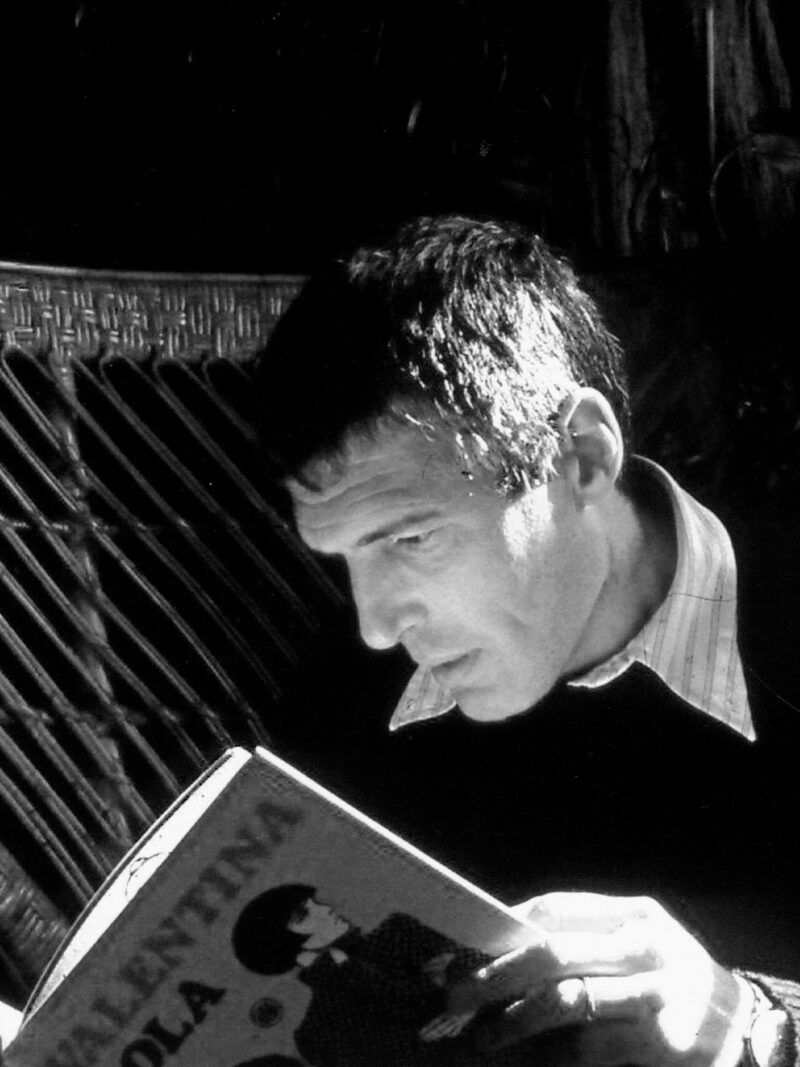
Guido CREPAX
COD:Born in Milan in 1933 into an environment where art was part of everyday life, Guido Crepax grew up surrounded by music and aesthetic sensitivity: his father was the principal cellist at La Scala, and the rhythm of sound became for him the rhythm of the page. This inclination toward composition merged with the rigor of his degree in Architecture in 1958, which taught him to design not only spaces but also graphic panels.
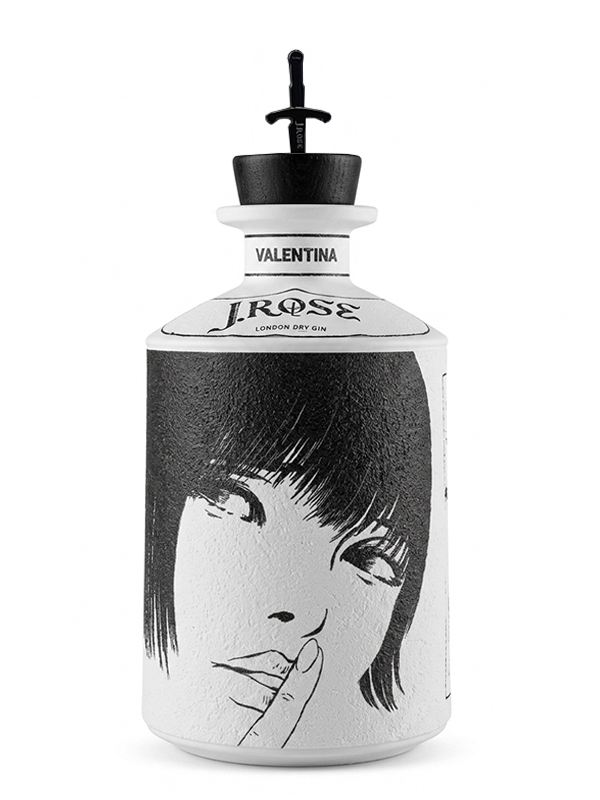
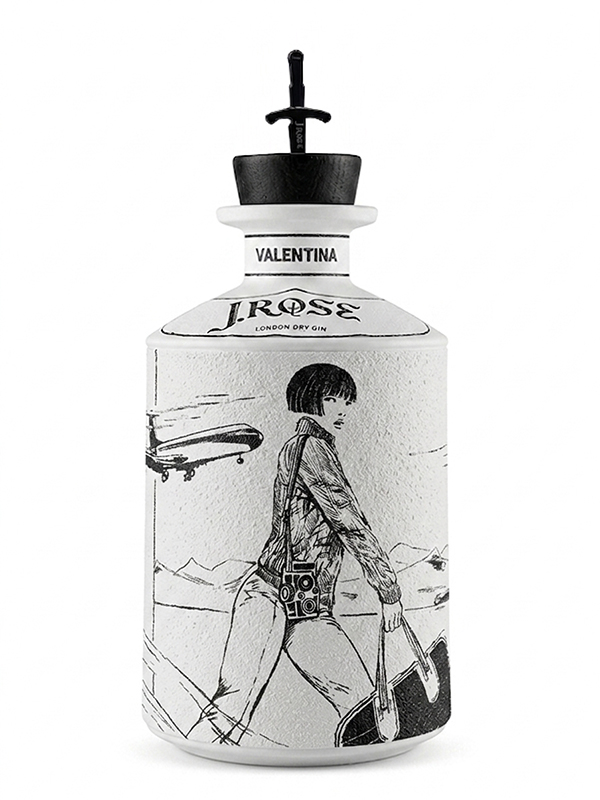
Before turning to comics, Crepax refined his elegant style in advertising graphics, creating jazz record covers and campaigns for brands such as Shell and Campari. These experiences prepared him to bring modern aesthetics into his most famous works. In 1965, he introduced Valentina Rosselli on the pages of Linus, initially as a supporting character. Soon, however, Valentina became the absolute protagonist: a “living” woman, with an identity card, a career as a photographer, and a complex psyche. Not an archetype, but a character who ages alongside her creator, moving through Italian society of the 1960s and 1970s with independence and intensity. Creating Valentina meant breaking taboos, exploring female emancipation, and transforming eroticism into intellectual inquiry.
Crepax also revolutionized the language of comics, moving beyond the traditional grid. His storytelling took on cinematic rhythms, fragmenting action into minute details—a reflection in glasses, a gesture, a breath—expanding the perception of time. In this way, Valentina’s everyday life blends into a dreamlike dimension, making the reader a participant in her fragility and visions. Through her, Crepax fused fashion, literature, and psychoanalysis into a total art form, capable of capturing the anxieties of a society in flux.
Crepax remains an architect of desire, able to translate the aesthetics of the twentieth century into an eternal line, leaving behind a style icon that continues to engage with modernity.
-
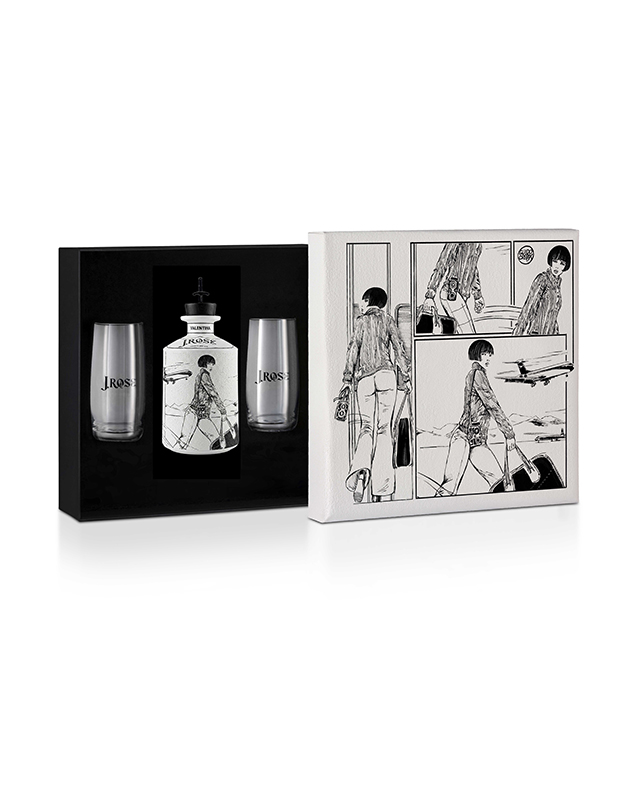
Box J.Rose London Dry Gin 70 cl VALENTINA JRBV03
COD: JRBV03 177,00€1 J.Rose Valentina 03 70 CL
2 Glasses
1 Luxury Box with canvas -
Box J.Rose London Dry Gin 70 cl VALENTINA JRBV02
COD: JRBV02 177,00€1 J.Rose Valentina 02 70 CL
2 Glasses
1 Luxury Box -
Box J.Rose London Dry Gin 70 cl VALENTINA JRBV01
COD: JRBV01 177,00€1 J.Rose Valentina 01 70 CL
2 Glasses
1 Luxury Box